

That is why choosing the right structure matters. A general-purpose theme can look good, but it often needs extra work before fixtures, results, league tables, predictions and match content feel like a natural part of the website.
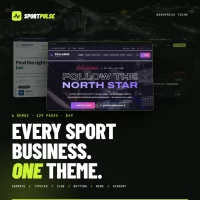
SportPulse was built around this problem. It is a sports WordPress theme with dedicated layouts for clubs, esports organisations, tipsters, betting affiliates, sports publishers and academies.
In this article, we look at some of the most important things a modern sports website should get right, from match-day information and predictions to sports data, content and online sales.
Table of Contents
Put the Match First
Different Sports Sites Need Different Structures
Sports Data Needs to Be Easy to Read
Predictions and Odds Need Context
The Shop Should Feel Part of the Site
Keep the Site Easy to Update
Start With Sport, Not a Generic Layout
1. Sport Websites Have a Different Rhythm
Before a match, people want fixtures, previews, team news, predictions and odds. During the event, attention moves to live information. Afterwards, the result, statistics and reaction become more important.
The website needs to reflect that rhythm.
If the next fixture is hidden several clicks away, or results are mixed into ordinary blog posts, visitors have to work too hard to find the information they came for.
A good sports site should make the most important information obvious immediately and then guide the visitor naturally towards deeper content.
2. Put the Match First
A fixture should clearly show who is playing, when the game starts and where visitors can find more information. A completed fixture should lead naturally to the result, report or statistics.
Match centres can bring several pieces of information together in one place, such as line-ups, events, statistics and reports.
That is much easier to follow than spreading the same information across separate pages.
The same principle applies outside football. Esports teams have matches and competitions, tipster sites have selections and results, and sports news publishers organise much of their content around upcoming and completed events.
3. Different Sports Sites Need Different Structures
A club supporter may want fixtures, results, the league table, squad information, tickets and merchandise.
A tipster audience wants predictions, odds and previous results.
A betting affiliate may focus on bookmaker comparisons, offers, reviews and betting guides.
A sports academy needs programmes, coaches, facilities, fees and booking information.
SportPulse addresses this with six separate demo websites covering football clubs, esports, tipsters, sports betting affiliates, sports news and academies. Each one starts with the structure that fits that type of sports website instead of forcing every project into the same layout.
4. Sports Data Needs to Be Easy to Read
Fixtures should look like fixtures. League tables should be easy to scan. Player profiles should make key information clear without looking like ordinary staff pages.
Useful sports layouts can include:
- fixtures and results;
- league tables;
- match centres;
- line-ups and match events;
- player profiles and squad lists;
- predictions and tipster records;
- odds and bookmaker comparison tables.
SportPulse includes these types of sports-data layouts as part of the theme. The information can be entered manually or connected to an external data source when more automation is needed.
5. Predictions and Odds Need Context
Visitors usually want to understand the selection, the available odds and the reasoning behind it. Over time, previous predictions and results also become part of the site’s credibility.
Betting affiliate websites have another challenge. They may compare bookmakers, bonuses and offers, so it should always be clear what is being compared and what terms apply.
SportPulse includes a dedicated Tipster demo for prediction websites and an Oddsmark demo for sports betting affiliates.
The betting-focused layouts also include space for bookmaker reviews, comparison tables, betting guides, offer terms, affiliate disclosures and responsible-gambling information.
This makes it easier to build a site where the betting content is organised clearly rather than added as an afterthought.
6. The Shop Should Feel Part of the Site
A football club may sell shirts, scarves, memberships or tickets. An esports organisation may have a merchandise store. A sports academy may sell camp places or programmes.
The shop should therefore feel like part of the same experience.
SportPulse includes WooCommerce layouts for shop, product, cart, checkout and account pages, styled to match the different sports demos.
That means a supporter can move from checking the next fixture to browsing club merchandise without suddenly feeling like they have entered a completely different website.
7. Keep the Site Easy to Update
Fixtures change. Results need to be added. Players move. Predictions are published. News breaks.
That makes ease of use especially important.
The person updating the website may be a club employee, content editor, tipster or academy administrator rather than a developer.
SportPulse supports both Elementor Free and the WordPress Block Editor, and its six demos can be imported as complete starter websites.
The theme includes 129 ready-made page templates across the demos, together with the demo content and images, so a new site can start from an existing sports structure rather than from an empty page.
Start With Sport, Not a Generic Layout
A football supporter, esports fan, bettor, academy parent and tipster subscriber may all arrive with completely different goals.
What they have in common is speed. They want to find the relevant fixture, result, prediction, story or product without searching through a generic website structure.
That is why starting with sport already built into the design can make a big difference.
For clubs, esports teams, tipsters, betting affiliates, publishers and academies looking for that kind of starting point, SportPulse includes six complete sports demos and 129 ready-made pages, with Elementor and WordPress Block Editor versions included.
The goal is simple: spend less time adapting a general website to sport and more time publishing the matches, predictions, results and content your audience actually came to see.






 smartbet
  vije
vije  windrawwin
  magenta




 *Odds – Are not always accurate and can change.

You must be logged in to post a comment.